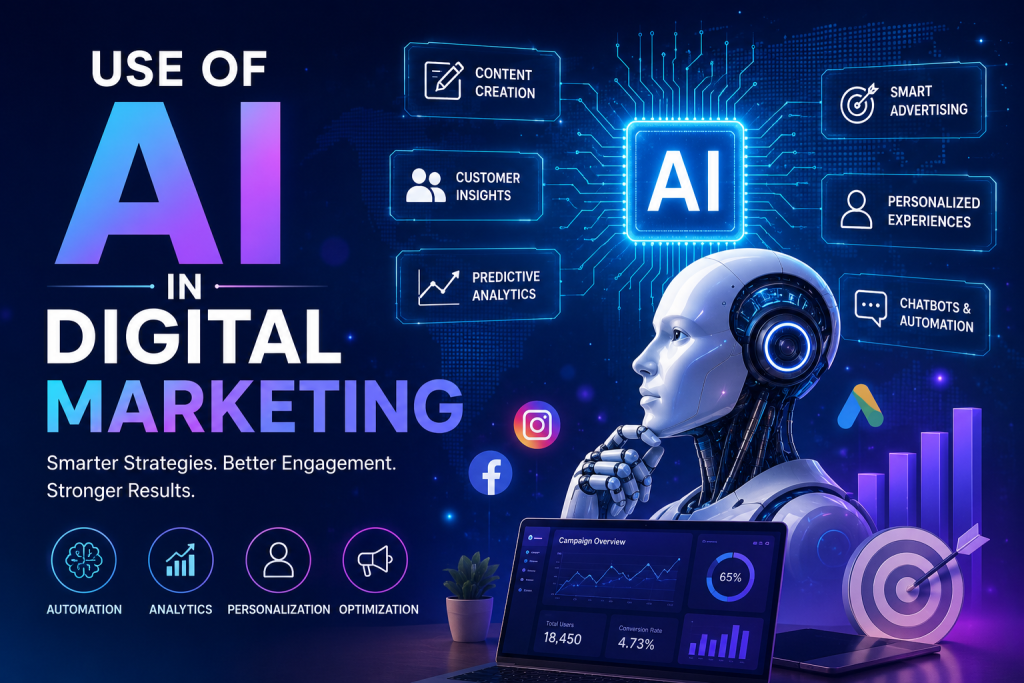
Artificial Intelligence (AI) is no longer a futuristic concept—it has become an essential part of modern digital marketing. Businesses of all sizes are using AI-powered tools to automate repetitive tasks, understand customer behavior, create engaging content, optimize advertising campaigns, and deliver personalized experiences that increase conversions.
According to recent industry trends, AI is transforming how marketers interact with customers, making campaigns more data-driven, efficient, and profitable. Whether you’re a startup, a small business, or a large enterprise, leveraging AI in digital marketing can help you stay ahead of your competitors.
In this article, we’ll explore how AI is changing digital marketing, its benefits, practical applications, popular AI tools, future trends, and best practices for implementation.
What is AI in Digital Marketing?
Artificial Intelligence in digital marketing refers to the use of machine learning, natural language processing (NLP), predictive analytics, and automation technologies to improve marketing activities.
Instead of relying solely on manual efforts, AI analyzes vast amounts of customer data, identifies patterns, predicts customer behavior, and recommends actions that maximize marketing performance.
AI helps marketers:
- Understand customer preferences
- Automate repetitive tasks
- Improve campaign performance
- Create personalized experiences
- Increase return on investment (ROI)
Major Applications of AI in Digital Marketing
1.AI-Powered Content Creation
Creating fresh, high-quality content consistently can be challenging. AI assists marketers by generating:
- Blog outlines
- Website copy
- Product descriptions
- Social media captions
- Email newsletters
- Video scripts
- Ad headlines
- SEO meta descriptions
AI speeds up content production while allowing writers to focus on creativity, storytelling, and brand messaging.
2.Personalized Customer Experience
Modern consumers expect brands to understand their preferences.
AI analyzes:
- Purchase history
- Browsing behavior
- Search patterns
- Demographics
- Previous interactions
Using this information, businesses can recommend products, personalize emails, customize landing pages, and display relevant advertisements.
Examples include:
- Personalized product recommendations
- Customized homepage content
- Personalized email campaigns
- Dynamic website experiences